

A new way to explore
contemporary art and ideas
What happens when artists collaborate with machines?
AI, robotics, and generative tools introduce new forms of creativity while raising questions about authorship, ethics, and control.
[ e-flux ]
[ e-flux ]
Will AI Remember the Days of Slavery?
Techno’s early machine-myths are read as competing theologies of automation: either apocalyptic technophobia that displaces class antagonism into metaphysical “soul” panic, or a Nietzschean “clearing” that deletes even the memory of slavery to inaugurate an unknowable future beyond humanist continuity.
Against Hollywood’s hallucinated robot revolts, the text reframes AI through Marxian production and racial capitalism, arguing that bias (Buolamwini) reveals slavery’s afterlife in computation—and that a truly technical, utilitarian superintelligence might target power itself, making emancipation synonymous with the erasure of the historical structures that reproduce domination.
Read more

[ e-flux ]
[ KADIST ]
[ KADIST ]
1542 – a flood (The Unmanned series)
A machinic cinema trained on its own prior images folds colonial Silicon Valley’s origin myth into a closed feedback loop, staging an inhuman vision that searches for meaning amid the “death” of animal gods and the return of intelligence to its birthplace. By displacing human agency through autonomous cameras and AI editing, the work critiques technological acceleration and anthropocentric historiography, proposing a posthuman, non-teleological temporality where cinema becomes both scientific apparatus and speculative archaeology.
Read more

[ KADIST ]
[ KADIST ]
[ KADIST ]
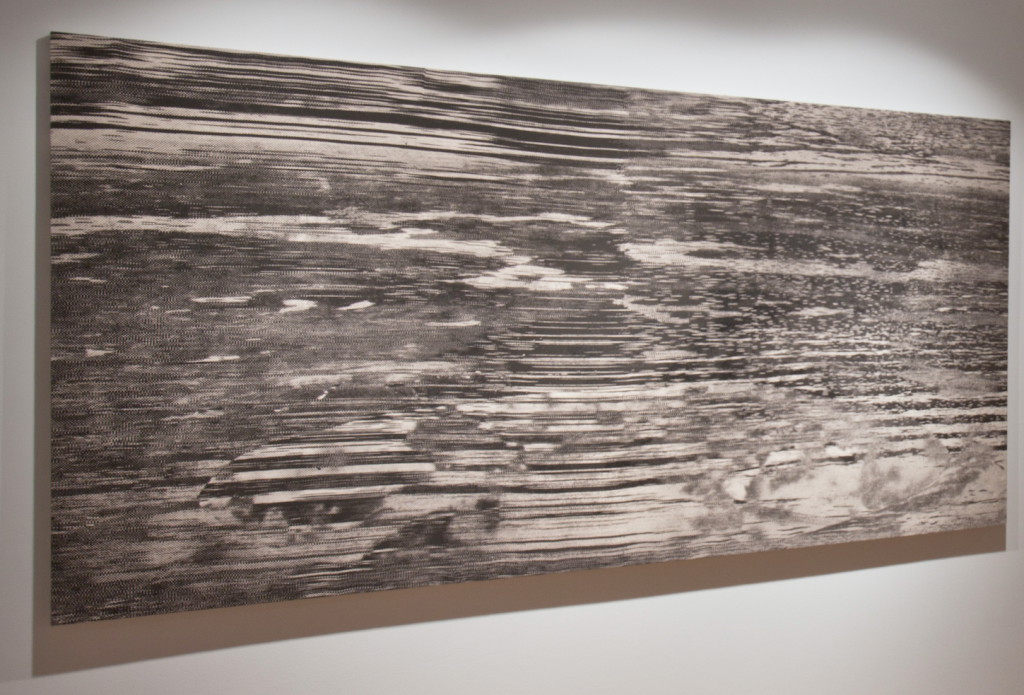
Static Field I
Media feedback and machine-assisted printing are mobilized to materialize “signature” noise—electromagnetic, atmospheric, and thermal interference—treating technological distortion as an index of otherwise invisible forces and infrastructures.
By framing these signals as quasi-lifeforms and extensions of consciousness, the work aligns post-digital/materialist critique with site-responsive archival engagement, foregrounding a choreography of human–machine co-learning that exposes the social and metaphysical stakes of networked perception.
Read more
[ KADIST ]
[ e-flux ]
[ e-flux ]
The Poetry of Feedback
Cybernetics emerges as a midcentury “lingua franca” that reorganizes artistic and theoretical practice around feedback, information, entropy, and system, collapsing boundaries between organism and machine, communication and control, and art and social organization. The text tracks how neo-avant-garde experiments (exemplified by Hannah Weiner) both contest and inadvertently prefigure post-Fordist management’s appropriation of participatory, self-regulating models, exposing a tension between emancipatory collaboration and the commodifying fungibility of the self under labor’s expanding logic.
Read more

[ e-flux ]
Back to top