

A new way to explore
contemporary art and ideas
The aesthetics of repair
From mending materials to revisiting historical wounds, artists use repair as a gesture of healing and resistance.
[ KADIST ]
[ KADIST ]
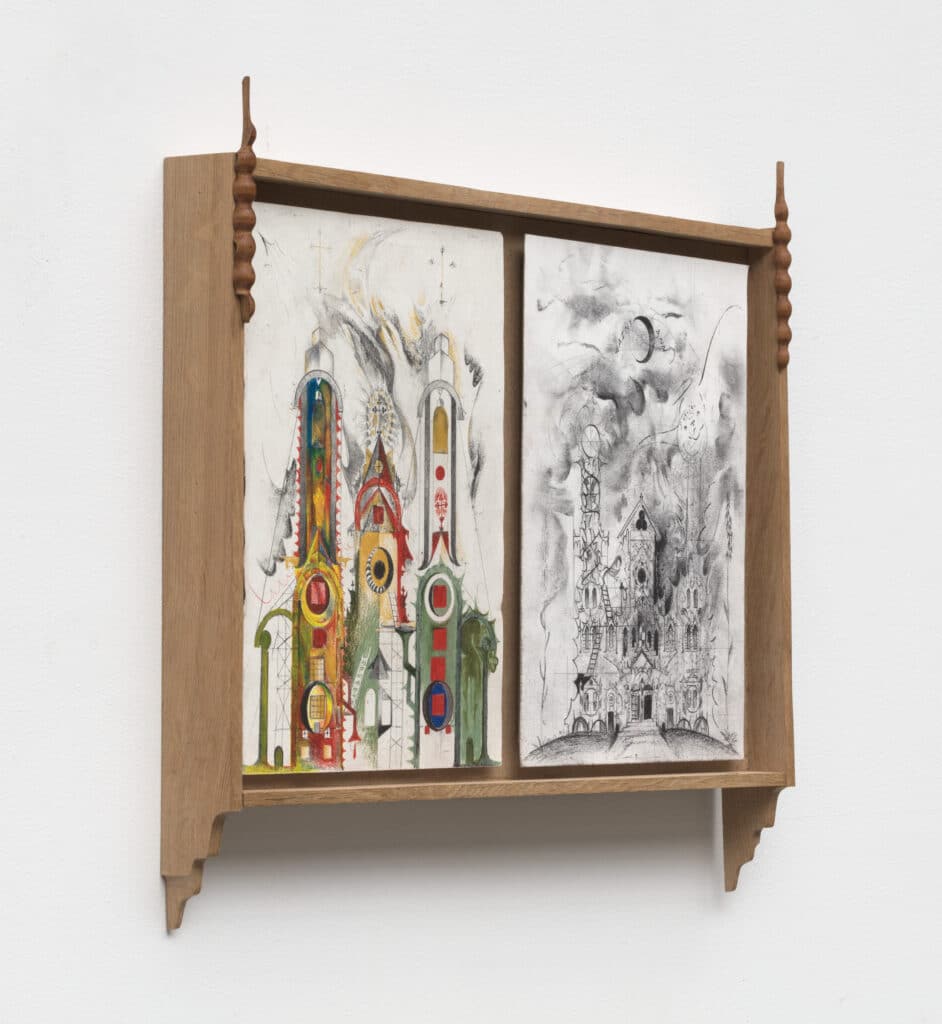
Presupposition of Saint Anne
Reliquary-like drawings and salvaged architectural fragments stage a dialectic between destruction and repair, turning a specific church fire and post-industrial debris into devotional form where aesthetic pleasure becomes a mode of mourning and reconstruction. Ecological toxicity and working-class harm produced by industry and empire are reframed through craft, local vernacular, and gothic-inflected ruin aesthetics, proposing transcendence, resistance, and communal healing from within collapse.
Read more
[ KADIST ]
[ e-flux ]
[ e-flux ]
Construction with Steel and Technology
Auto-destructive art is staged as a material critique of capitalist techno-obsolescence: the steel cube of aging devices literalizes entropy, toxicity, and the false promise of innovation while demanding an ethics of artistic responsibility beyond art-world solipsism. The narrative satirizes accelerationist fantasies and avant-garde martyrdom by showing how political desire collapses into spectacle, misreading destruction as emancipation and turning critique into another violent performance within the very system it opposes.
Read more

[ e-flux ]
[ e-flux ]
[ e-flux ]
The Unauthorized Repair of the World
Unauthorized repair in Huaqiangbei is framed as a vernacular counter-practice to vectoralist enclosure—DRM, patents, and “ecosystems” that convert maintenance into a controlled revenue stream—where improvisational techniques and informal knowledge networks reopen devices as sites of material agency and class struggle.
Repair becomes a general theory of reproduction under planetary breakdown: “authorized” repair stabilizes hierarchical class society by commodifying remediation (from right-to-repair regimes to carbon offsets and wellness), while “unauthorized” repair names a healing politics that parasitically re-pairs naturecultures toward alternative relations of life, labor, and futurity.
Read more

[ e-flux ]
[ KADIST ]
[ KADIST ]
Nightmare-Wallpaper (No.DCCC901-16#8): An-Angel-in-Conversation-with-a-Young-Lady
Surrealist-derived automatism is redeployed as a self-healing, processual practice forged in the juridical theater of post–Umbrella Movement repression, where unconscious marks are algorithmically enlarged and iterated into wallpaper-like ornament that sutures psychic repair to political witnessing. By circulating from courtroom notebook to mass-media public domain, the work critiques state–subject relations and commodity spectacle through immaterial, everyday, collaborative interventions that sediment into collective memory as subtle, non-object-based resistance.
Read more

[ KADIST ]
Back to top