
A new way to explore
contemporary art and ideas
Is the institution still a neutral space?
Artists expose how museums participate in power structures tied to nationalism, capital, and exclusion.
[ KADIST ]
[ KADIST ]
What a fucking wonderful audience
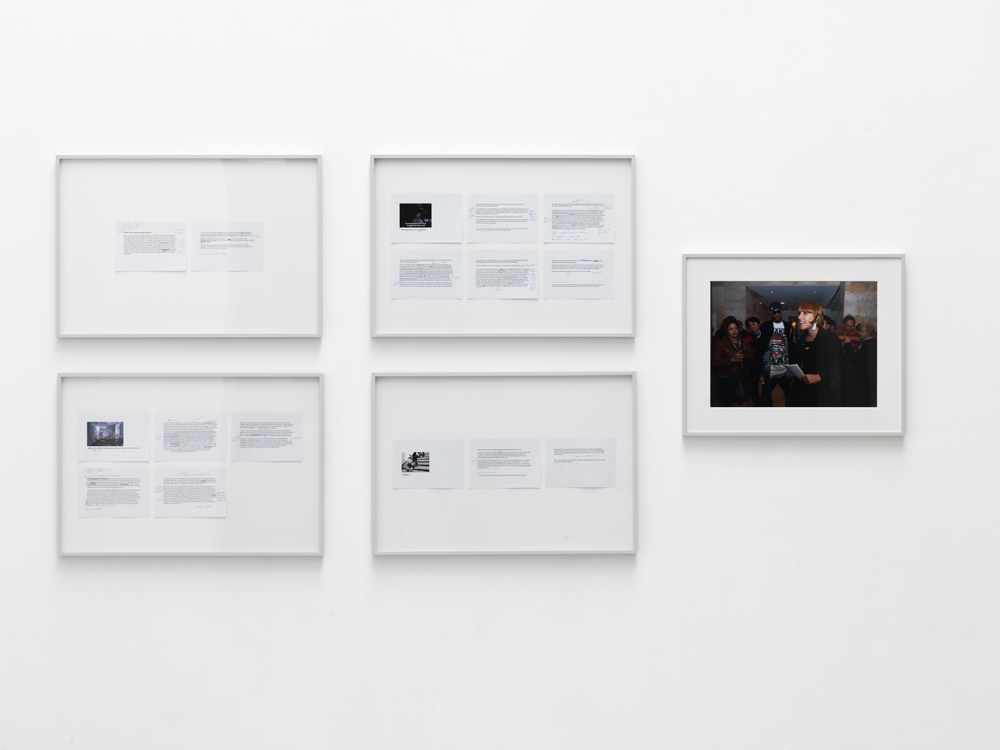
Institutional critique is staged through a language-driven, conceptualist guided tour that narrates absent artworks, turning mediation itself into the work and exposing how museums produce meaning via discourse rather than objects. By delegating performance to actors and layering authorial script with contradictory annotations, the piece destabilizes authorship and spectatorship, aligning with Debordian critiques of spectacle while frustrating the audience’s expectations of artistic presence and material encounter.
Read more
[ KADIST ]
[ e-flux ]
[ e-flux ]
Inside and Out: The Edges to Critique
Institutional critique is framed as a border-politics of “inside/outside” that museums actively manage through recuperation: disruptive acts must be nominalized as performance, spatialized into the white cube, and thereby neutralized into legible, collectible critique.
By disentangling conceptual “dematerialization” from post-Fordist “immaterial labor,” the text tracks how authorship, withdrawal, and subversive access (from D’Arcangelo to Lawler, Magid, and Khalili) expose the museum’s infrastructural entanglement with capitalist, racialized state power—where critique is permitted, priced, and policed rather than emancipatory.
Read more

[ e-flux ]
[ e-flux ]
[ e-flux ]
Positively White Cube Revisited
White-cube gallery space is theorized as a historically produced, ideologically saturated apparatus that masquerades as neutral in order to suspend social time, confer timeless aura, and secure art’s commodity status through an architectonics of transcendence. Reframed as a hinge between modernism and postmodern spatial/institutional critique, O’Doherty’s method generalizes into a comparative politics of inside/outside—where context becomes content and critical practice must restage the conditions of visibility, exclusion, and value-production.
Read more
[ e-flux ]
[ KADIST ]
[ KADIST ]
Adição por subtração 4 (Addition by Subtraction 4)
Surveillance, control, and the policing of personal space are staged through a white-cube intervention where a frame of jagged glass both protects and threatens, turning the gallery’s “empty” interior into the work’s central problem. By making addition coincide with subtraction—object with void—the piece critiques institutional display and urban constraint while aligning Cidade’s practice with Situationist-derived tactics of drifting, resistance, and poetic action in public space.
Read more

[ KADIST ]
Back to top