

A new way to explore
contemporary art and ideas
Is the body the last frontier of political resistance?
From surveillance to reproductive rights, artists explore how bodies become battlegrounds where power, autonomy, and identity are contested.
[ e-flux ]
[ e-flux ]
The Collective Alice, or, on Fear, Death, Multitudes, and Pain
Biopolitical modernity produces a disoriented “body without organs” in which the multitude oscillates between emancipatory commons and zombifying crowd, as democracy is hollowed into discourse under a permanent state of exception and global security/apartheid regimes. Fear, fluid individuality, and simulated overactivity become the affective infrastructure of this order, against which the text calls for autonomous zones of trust, participatory institutions, and practices of witnessing that can rearticulate the real and build solidaristic, confrontational forms of community.
Read more

[ e-flux ]
[ KADIST ]
[ KADIST ]
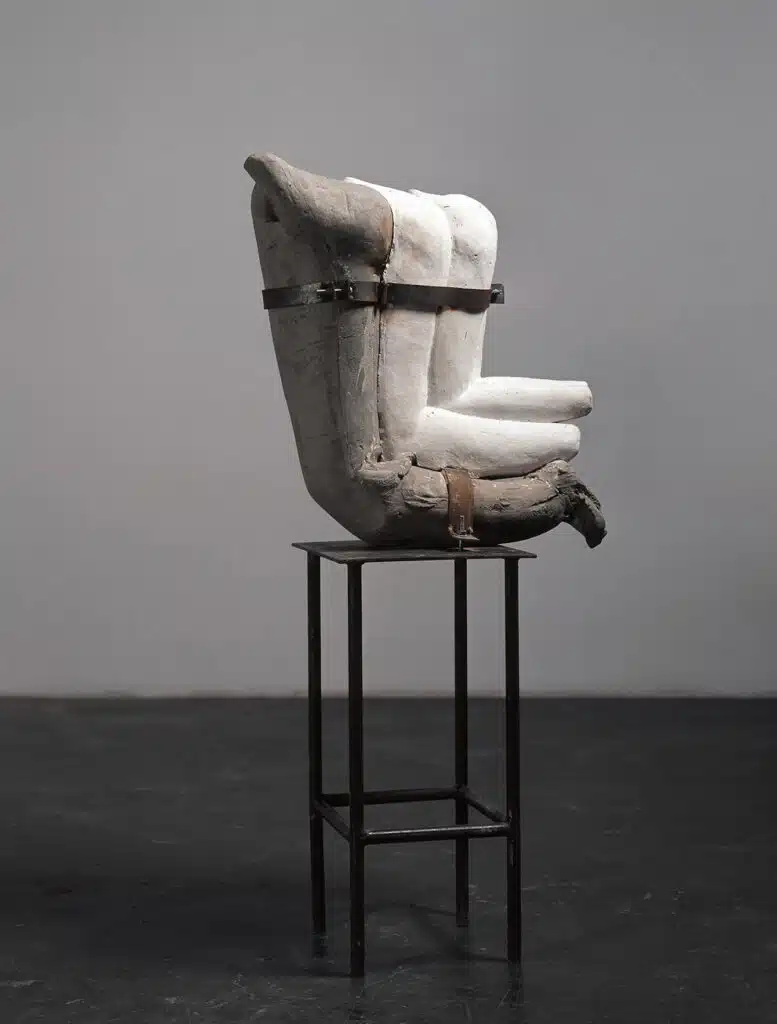
Flesh in Stone - Ghost No.1
Fragmented cement limbs and exposed molds mobilize “incompleteness” to destabilize figuration, redirecting attention from bodily wholeness to the friction between rough industrial matter and idealized corporeal form.
This material tension becomes a cultural critique of subject formation under contemporary regimes of discipline—individualization through confinement, control, and voluntary bondage—grounded in an erudite, research-driven practice of site-specific bodily intervention.
Read more
[ KADIST ]
[ KADIST ]
[ KADIST ]
Prisons
Embodies a politics of resistance in which the body becomes both medium and weapon, staging hunger strike and disability as lived counter-images to state violence and the militarized suppression of dissent. Through a documentary-archival tension between the filmed subject and the viewer’s gaze, the work interrogates how bodies are socially coded, exploited, and disciplined across geopolitical contexts, extending into critiques of masculinity and incarceration.
Read more
[ KADIST ]
[ e-flux ]
[ e-flux ]
Letter from Prison
Carceral darkness and bodily deprivation become an aesthetic-political medium: the hunger strike is framed as performative sacrifice that converts the artist’s life into testimony, asserting dignity, self-authorship, and freedom against state violence. Drawing on dissident martyr lineages and a humanist ethic of nonviolent resistance, the text fuses personal biography with collective cultural critique, proposing art as a consecrated practice that awakens civic agency and indicts the complicity that sustains oppression.
Read more
[ e-flux ]
Back to top