

A new way to explore
contemporary art and ideas
Decolonizing the gaze
Artists challenge visual regimes inherited from colonial histories, reframing who is seen, how, and by whom.
[ e-flux ]
[ e-flux ]
Decolonization as the Horizon of Political Action
Decolonization is posed as the necessary horizon of political action in the Anthropocene/Capitalocene: a break with neoliberal “accumulation by dispossession,” technological rationality, and the colonial epistemologies that normalize differential access, sacrifice zones, and the collapse of democratic representation. Through the speculative occupation of a luxury tourism complex, the text imagines recomposed autonomy and translocal solidarity grounded in indigenous embodied knowledges and commons-based governance, redirecting modern infrastructure toward collective reproduction and ecological repair rather than extractive development.
Read more

[ e-flux ]
[ KADIST ]
[ KADIST ]
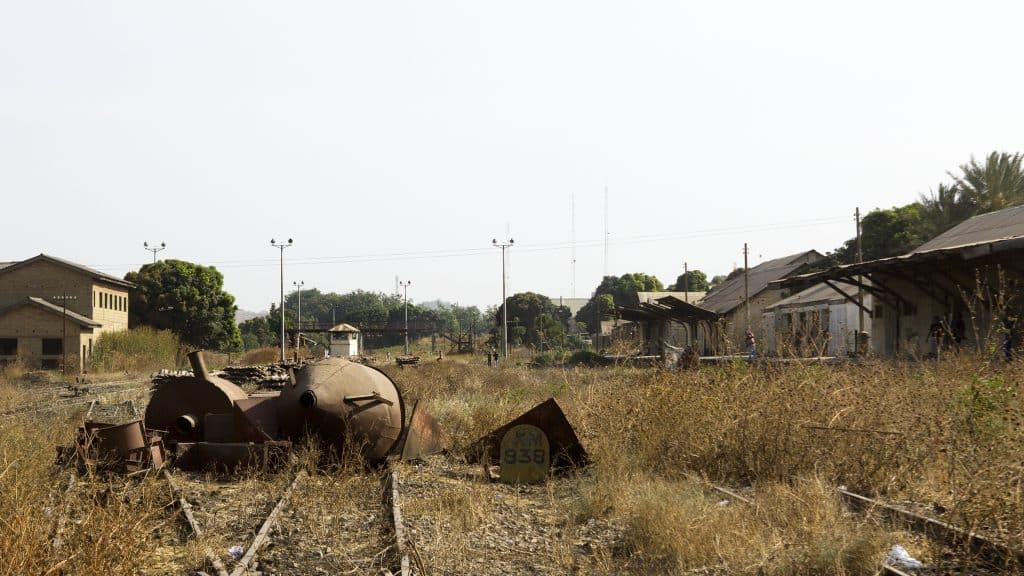
Anatomy of Landscape - Jos 25
Postcolonial landscape is read as an extractive palimpsest: tin-mining infrastructures and railways materialize colonial power by reorganizing territory for export rather than local mobility, leaving ecological and social residues that persist as visual evidence.
Through layered, overlapping photographic vistas and archival inquiry, the work mobilizes memory and affect to pluralize history, using image-making as a critique of Western ideological narratives and a probe into identity formed within socio-economic and historical geographies.
Read more
[ KADIST ]
[ KADIST ]
[ KADIST ]
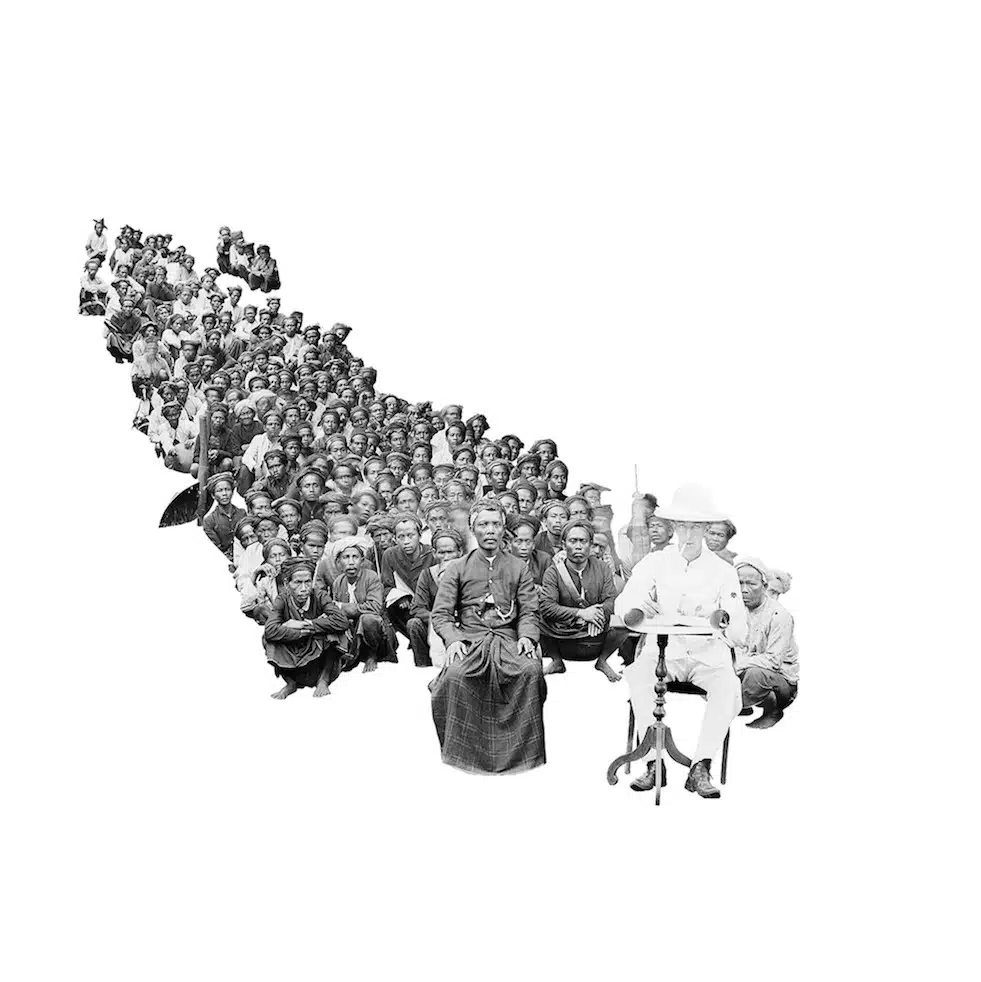
Wherein one nods with political sympathy and says I understand you better than you understand yourself, I’m just here to help you help yourself
A sardonic critique of colonial paternalism and the ethnographic gaze, the work stages Indigenous Malay bodies as subjects of a power-laden visual regime, exposing how “sympathetic” understanding can function as domination. Through photography and photomontage that mobilize archives, popular culture, and collaborative Indigenous knowledge, it interrogates historical memory and the ongoing destabilizations of neo-colonial globalization in Southeast Asia.
Read more
[ KADIST ]
[ e-flux ]
[ e-flux ]
Luck, Statecraft, and Withdrawal: Video Criticism in Southeast Asia
Maps Southeast Asian video criticism through David Teh’s lexicon of “withdrawal/avoidance/evasion,” where artists mobilize allegory, hauntology, and counterhistory to expose state capture while refusing the nation-state as the primary horizon of meaning in favor of supranational and longue-durée imaginaries (Zomia, Isaan, animist cosmologies).
Interrogates the costs of Western-comparative art histories and institutional display—censorship, recuperation, and global labor extraction—arguing that the region’s moving-image practices stage antagonistic temporalities and mythic-historical deconstructions that contest authoritarian modernity without guaranteeing political transformation.
Read more

[ e-flux ]
Back to top