
A new way to explore
contemporary art and ideas
Art after the pandemic
New works reflect on isolation, proximity, vulnerability, and the transformation of social rituals.
[ KADIST ]
[ KADIST ]
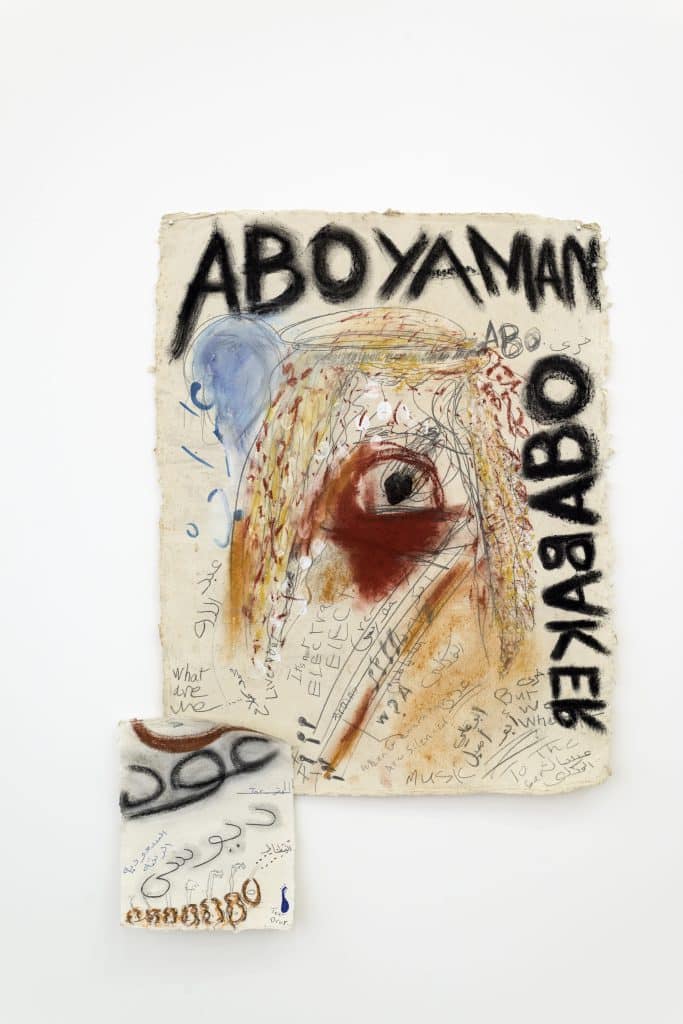
Abo Baker
Pandemic-era drawings operate as indexical traces of a destitute present, proposing disidentification as an aesthetic and political strategy for navigating fractured social relations and material conditions. An homage to Abu Bakr Salem’s oud under siege in Yemen extends Rechmaoui’s formalist material politics—treating urban matter as archive and testimony—to critique nationalism, class, and the infrastructural violences that structure contested histories and collective struggle.
Read more
[ KADIST ]
[ e-flux ]
[ e-flux ]
David Buuck, Three Books and a Poem
Pandemic temporality and constrained circulation become a frame for poetry as social document and collective address, foregrounding carceral grief, worker testimony, and the ethics of reading as a mode of solidarity rather than aesthetic consumption.
Indigenous critique of colonial display and Adnan’s phenomenology of time converge on a poetics of receptive listening—cross-genre, event-score, and philosophical lyric—insisting that wonder and attention remain inseparable from historical injustice and political unrest.
Read more
[ e-flux ]
[ e-flux ]
[ e-flux ]
Triple Braid, or, What Gives Us Reason to Hope?
Pandemic time becomes a lens on uneven vulnerability and the Hungarian state’s securitarian scapegoating, prompting a turn from compromised institutions toward extra-institutional, care-based cultural infrastructures that treat representation as a material condition of survival rather than a symbolic add-on.
Grassroots art practices (OFF-Biennale, PAD, News Medley, Péli/RomaMoMA) are framed as counterpublic, feminist, and decolonial/anti-ethnographic interventions that retool visibility, authorship, and collective memory—while insisting that emancipatory projects must also confront their internal contradictions (gendered labor, the male gaze) to sustain a plural, non-national “collective body.”
Read more

[ e-flux ]
[ KADIST ]
[ KADIST ]
Slowed-down Journey
Delegated drawing and the artist-as-commissioner displace authorship into a distributed social field, turning travel memory into a collectively produced, quasi-naïve storyboard that tests authenticity, skill, and the status of the artist’s hand.
Conceptual and participatory strategies blur exhibition and everyday life to critique art-world rituals and mobility’s uneven access, situating Ondák’s discreet institutional interventions within post-socialist experience and broader relational/institutional critique.
Read more

[ KADIST ]
Back to top