

A new way to explore
contemporary art and ideas
[ KADIST ]
[ KADIST ]
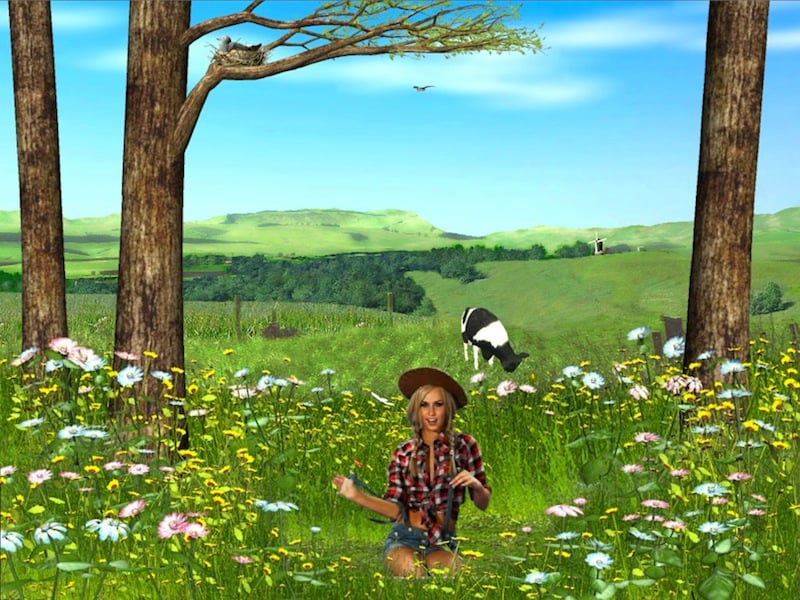
SpringValle_ber_girls
Networked collage and post-internet aesthetics fuse screensaver pastoralism with VirtuaGirl stripper imagery to expose how digital environments eroticize, commodify, and algorithmically loop the female body within regimes of online escapism. By treating the Internet as medium, archive, and site of performance—via webcam self-portraiture and Photoshop “impasto” layering—Cortright reframes authorship and embodiment through low-fi vernaculars, simulating painterly materiality while critiquing the social and representational politics of the digital realm.
Read more
[ KADIST ]
[ e-flux ]
[ e-flux ]
Sticky Notes, 1-3
Split-screen perception becomes a governing metaphor for how memory sutures porn spectacle, documentary Orientalism, and nuclear media into a single apparatus of looking, where meaning is produced through apophenic/patternic connections across competing screens, archives, and afterimages. Feminist and queer critique threads through this media ecology to expose how bodies (genitals, gender, laboring women, irradiated workers) are commodified, disciplined, and contaminated by technocapitalism and state power, while the text tests whether montage, archival debris, and imagined apocalypse can interrupt the loop binding sex, violence, and exchange.
Read more

[ e-flux ]
[ e-flux ]
[ e-flux ]
Obscure Sorrows: Thoughts around the 9th Berlin Biennale
Sarcastic post-internet spectacle is framed as an institutional attitude that normalizes complicity, collapsing critique into branding and turning the biennial into a showroom for neoliberal subjectivities (self-optimization, novelty fetish, “indebted man”) rather than a site for countercultural or counterfinancial agency.
Against this corporatized genre-fication and “fear of failure,” the text calls for hybrid, time-sensitive strategies that confront debt, militarized information technologies, and urban/colonial governance—rejecting mimicry and ironic nihilism in favor of materially engaged, politically accountable art production.
Read more
[ e-flux ]
[ KADIST ]
[ KADIST ]
GUILLOTINÆ Wanna Cry, Act Yellow: Break Room
A speculative, multi-channel montage collapses the hierarchy between political news and pop spectacle, treating all media signals as equivalently authoritative to expose how contemporary publics are formed by algorithmic adjacency, affect, and mass devotion to both celebrities and revolutionary icons. By subverting productivity imperatives amid systemic collapse, the work mobilizes feminist and anti-extractive critique through time-warped fabulation and sonic excess, insisting that “normalcy” and futurity are unstable constructs shaped by power, ecology, and collective complicity.
Read more

[ KADIST ]
[ KADIST ]
[ KADIST ]
Sickhands
Webcam self-portraiture is framed as a post-internet practice that collapses artist, performer, and editor into a single interface, using banal, low-fi software distortions to probe how the body and self are mediated, performed, and re-authored in digital space.
By treating the Internet simultaneously as medium, archive, and site of circulation, the work critiques networked visual culture’s vernacular aesthetics and its social ramifications, while translating found online debris into layered, painterly simulations that blur authorship, authenticity, and materiality.
Read more

[ KADIST ]
[ e-flux ]
[ e-flux ]
The Silence of the Lens
A shift from lens-based photography’s contingent co-production of world and author toward computational image regimes (3-D, scanning, algorithmic capture) collapses the gap between perception and signal, replacing modern “magic” and emancipation with total fabrication, security logics, and a return of the tableau/masterpiece as ideology. Drawing on Flusser, Baudrillard, and psychoanalytic distinctions between Vorstellung and Bewusstsein, this condition is framed as a culturally generalized madness in which subjects are deluded into believing they still contribute a viewpoint, even as automated systems pre-compose memory-conforming images and render the lens—and with it photographic authorship—silent.
Read more
[ e-flux ]
[ e-flux ]
[ e-flux ]
The Truth of Art
Art’s claim to truth is reframed from communicative persuasion (shared language, belief, propaganda) to technological world-making and conservation, where avant-garde strategies transform subjects by altering environments and suspending the logic of progressive replacement.
With the internet’s collapse of production and exhibition into profane documentation under an algorithmic gaze, artistic “surplus of vision” shifts from the artist to computation, making art paradigmatic as a politics of nonidentity—strategic disidentification from imposed taxonomies enabled by decontextualizing, recontextualizing archives.
Read more
[ e-flux ]
[ KADIST ]
[ KADIST ]
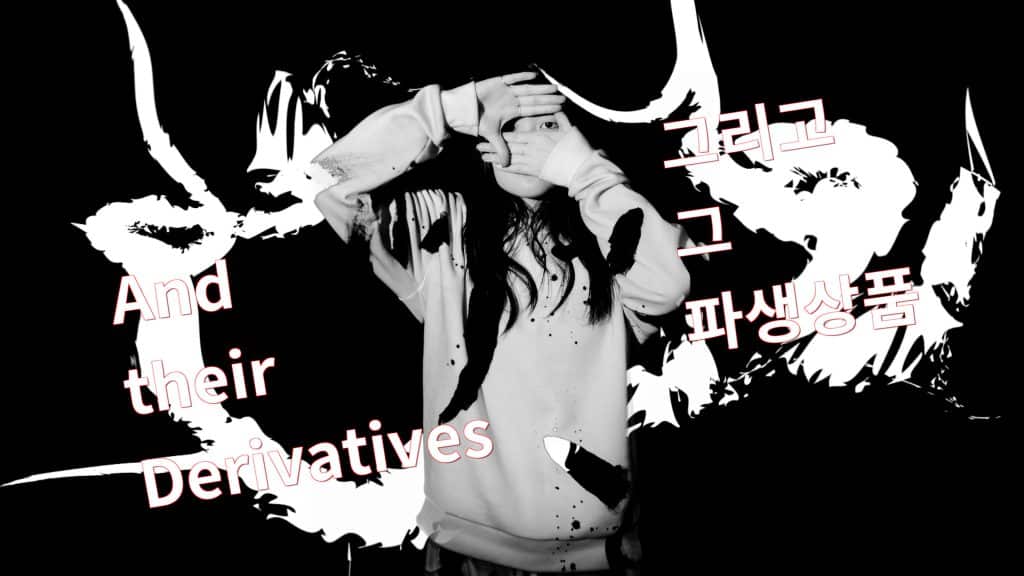
Unindebted Life
Post-internet audiovisual poetics fuse calligraphic vitality, ancient elemental spirituality, and digital temporality to stage the body’s cellular change as an allegory for life under contemporary capital and techno-biopolitical transformation.
Speculative narration and song articulate uncertainty, refusal, and non-belonging while proposing a “community without a community,” using reconfigured installation/display structures to critique economic precarity and ecological urgency and to imagine parallel audio-visual languages.
Read more
[ KADIST ]
[ KADIST ]
[ KADIST ]
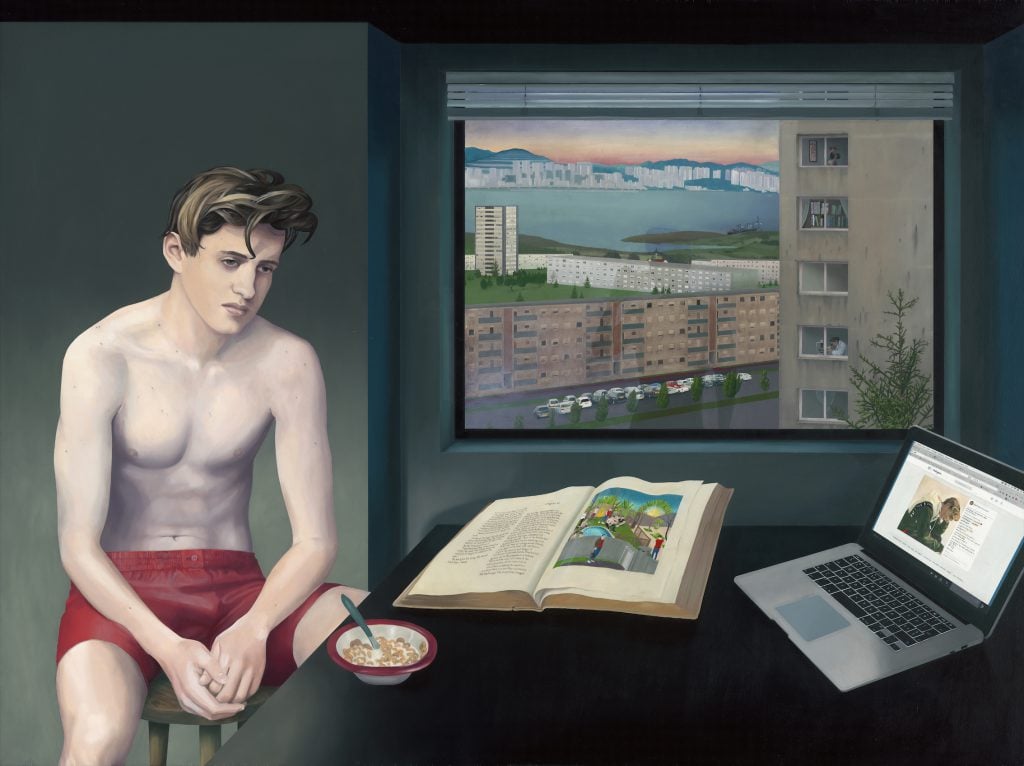
A view from an apartment
A digitally sourced portrait of a late-adolescent subject stages social-media loneliness and contemporary alienation, juxtaposing immobilized attention before screens with expansive urban infrastructure to frame intimacy as mediated and estranged. Through a collage-like method of assembling dozens of references—from art history to online images—the work theorizes painting as a post-photographic, post-cinematic construction that critiques networked subjectivity while reactivating modernist and conceptual precedents (Manet/Jeff Wall/Richter) into a video-game-like imagined realism.
Read more
[ KADIST ]
[ e-flux ]
[ e-flux ]
Return of the Gothic: Digital Anxiety in the Domestic Sphere
Gothic tropes re-emerge in post-internet moving-image art as a cultural technology for metabolizing the digital uncanny: the animation of objects, ghostly mediation, and the intrusion of networked systems into the home re-stage Victorian-era anxieties around modernization, immateriality, and agency. By foregrounding domestic architecture, hybrid media, and prop-relic installations, these works critique how internet culture reorganizes subjectivity and kinship—shifting from collective to atomized viewing—while insisting that contemporary digital aesthetics remain historically haunted, psychologically charged, and materially contested.
Read more
[ e-flux ]
[ e-flux ]
[ e-flux ]
Editorial: “Art After Culture”
Post–Cold War globalization and the internet are framed as twin infrastructures through which capital supplants politics and history, converting “cultural exchange” into an abstract, spectacular regime that flattens difference while masking new forms of governance and coercion. Against this backdrop—marked by ecological catastrophe and the exhaustion of modernist universalism as well as reactionary cultural withdrawal—the text asks what kind of art can exceed culture’s representational apparatus and confront humanity’s entangled toxicity at a possible endpoint of cultural-technological life.
Read more
[ e-flux ]
[ KADIST ]
[ KADIST ]
After Scarcity
A sci-fi video-essay reactivates Soviet cybernetic planning as a suppressed genealogy of networked economic technology, using counterfactual history to contest the inevitability of today’s financialized internet and its temporal regime of speed, speculation, and high-frequency capitalism.
By collapsing documentary and futurist narration, it advances a post-financialization imaginary—regulated data infrastructures, alternative pedagogies, and “weird economies”—that reframes contemporary art’s complicity with urban renewal while reopening collective planning as a viable horizon beyond broadband idealism.
Read more
[ KADIST ]
Back to top